

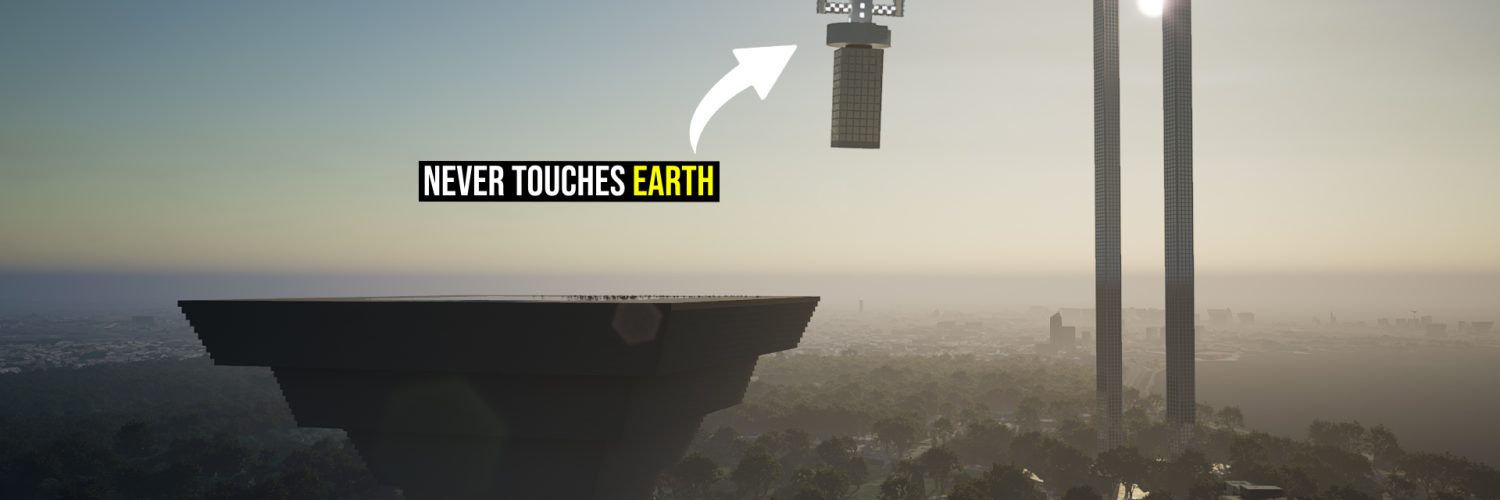
Architectural boundaries are being pushed further than ever before, moving beyond traditional skyscrapers into the realm of arcologies and space-integrated structures. While projects like New York’s Big Bend aim to bend the rules of gravity and zoning, others, like the Shimizu Mega-City Pyramid, require materials like carbon nanotubes that haven’t even been mass-produced yet. By visualizing these structures at their true scale, we can finally grasp the sheer audacity of these designs. Whether it’s an inverted pyramid digging 300 meters into the earth or a tower hanging from the stars, these animations provide a rare look at the potential physical footprint of our future civilization.
Mexico’s Earthscraper goes 300 meters deep to bypass the city’s strict building laws that forbid destroying historic structures or building over eight stories high. It’s a “skyscraper” that respects the skyline by disappearing beneath it.
The reason this Big Data Factor comparison is worth watching is that they bridge the gap between a blueprint and a reality we can actually feel. When you see the Analemma Tower, a building that literally descends from the sky, rendered next to a familiar landmark like the Empire State Building, the ‘cool factor’ isn’t just in the height; it’s in the perspective shift. Watching these animations allows our brains to stop seeing ‘concepts’ and start seeing ‘possibilities.’ It turns a flat image into a tangible, 3D experience that makes you wonder: How close are we to actually living there?





Add comment